Laparoscopy Hospital or World Laparoscopy Hospital is India’s utmost super speciality Minimal Access Surgery Hospital and the first & only super specialty hospital in India devoted only for Medication, Training and Research in endoscopic operation Established by Master Minimal Access Surgeon Prof. RK Mishra, this hospital are celebrating now its 17 year of foundation. Laparoscopy has two locations, one in New Delhi and another in Gurgaon. The Gurgaon branch was established to gratify international patients and known as World Laparoscopy Hospital. Laparoscopy Hospital is the only hospital in India which provides absolutely free treatment to poor and needy patients apart from the medicine and syringe cost.
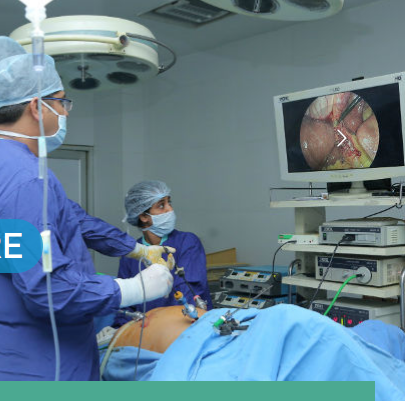
Dr. R.K Mishra mission to start a specific University in his area of savvy materialized at Ninewells Hospital and Medical School, U. K. where he cooperated with Professor Sir Alfred Cuschieri. In following of his academic goals, he undertook a Diploma in Laparoscopic Surgery from University of Strasbourg, France. Recently entire their surgical residency and Master degree in Minimal Access Surgery (M.MAS) from Ninewells Hospital and Medical School, University of Dundee, United Kingdom. At the time his practice in the United Kingdom Dr. Mishra invented the optimum shadow casting illumination technique to advance the task performance of laparoscopic surgery.
World Laparoscopy Hospital Specialist are the market leaders in minimally invasive surgery,” Dr R K Mishra, Director of the World Laparoscopy Hospital and professor of TGO University. “This treatment signals for our nationally single incision surgery and elevates our achievement to provide the best surgical care while improving patient recovery.” Dr. Mishra says that single incision laparoscopic surgery should not only for simple surgery like cholecystectomy but should also be used for surgery like donor nephrectomy and for donor who have already decided to give the gift of life and are willing to go through surgery to assist a person in required, the possibility of coming through the surgery without scars benefit.
The mission of Dr. R. K. Mishra for World Laparoscopy Hospital is to be the world leader in Laparoscopic and Robotic experience.
Provide dynamic access to affordable medical care. Excel in surgical minimal access service.

The da Vinci® Surgical System is a robotic surgery system that offers a minimally invasive alternative to both open surgery and laparoscopy. Because robotic surgery requires only a few tiny incisions and offers greater vision, precision and control for the surgeon, patients often recover sooner, move on to additional treatments if needed, and get back to daily life quicker. Potential benefits of robotic surgery for patients include: Reduced pain Lower risk of infection or complications Less blood loss (fewer transfusions) Shorter hospital stays Less scarring due to smaller incisions Faster return to normal activities (e.g., sexual function, urinary continence). At World Laparoscopy Hospital, surgeons perform minimally invasive robotic surgeries as a treatment for many diseases, including prostate, stomach, pancreas, liver, colon, head and neck, as well as some gynecologic procedures.
To make this vision a reality we are:
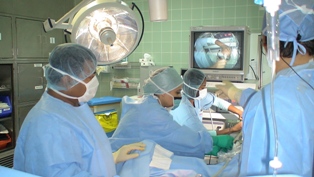
LAPAROSCOPIC SURGERY TRAINING (INDIA-UAE)